Basement Drying & Dehumidification
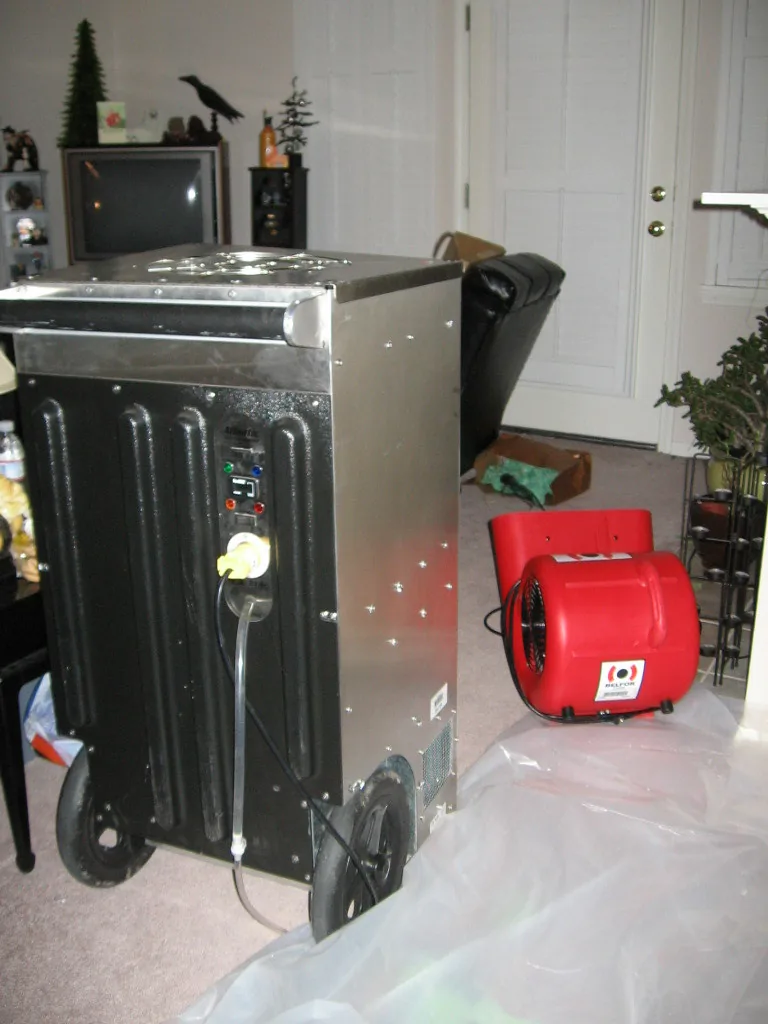
What This Service Includes
Structural drying is the controlled removal of moisture from building materials after the standing water is gone. It works by balancing air movement, dehumidification, and temperature so moisture leaves wood, drywall, and concrete instead of sitting in them. The EPA states the key to mold control is moisture control, and advises drying water-damaged areas within 24 to 48 hours to help prevent mold growth, which is why drying is a timed discipline, not a waiting game.
When You Need It
- A basement looks dry after mopping but smells musty, a sign moisture remains in materials you cannot see.
- Water wicked two feet up the drywall after a storm, and the wall feels dry on the surface while the inside is wet.
- Concrete floors and walls hold moisture for weeks after a flood because masonry releases water slowly.
- A finished basement has wet insulation trapped behind intact-looking drywall.
- Residual dampness lingers after pump-out, with humidity readings that will not come down on their own.
How the Work Proceeds
- Moisture inspection and mapping
Pin and pinless meters, and sometimes thermal imaging, map exactly which materials are wet and how wet they are. You cannot dry what you have not found, and hidden moisture is the whole reason this phase exists. - Establish dry standards
Readings are taken from unaffected materials in the same building to set the target. Wood, drywall, and concrete each have their own normal range, so one number does not fit all. - Place drying equipment
Air movers push dry air across wet surfaces while dehumidifiers pull the evaporated moisture out of the air. Placement follows the moisture map, with attention to wall cavities, under flooring edges, and other trapped-moisture spots. - Monitor and adjust
Readings are retaken on a schedule, and equipment is repositioned as the moisture map changes. Drying that is not monitored is just noise and electricity. - Verify against dry standards
Drying ends when materials read at or near their dry standards, not when they feel dry to a hand. Touch is a poor instrument: surfaces dry long before cores do. - Document the result
Start-to-finish readings document that the structure actually dried. This record matters for insurance, for rebuild crews, and for your own confidence that the job is done.
Equipment Used
- High-velocity air movers
- Refrigerant dehumidifiers
- Desiccant dehumidifiers for dense materials
- Pin-type moisture meters
- Pinless moisture meters
- Thermal imaging cameras
- HEPA-filtered air scrubbers
- Hygrometers and data loggers
What It Costs
Basement flood projects in Ohio typically range from $1,000 to $12,000 depending on the project, and every project is different. Where yours falls depends on the factors below. Be cautious of any quote given without moisture mapping of your actual basement, and of prices far outside this range without a clear, documented reason.
- Overall project scale: most basement flood projects fall between $1,000 and $12,000, and every project is different, so the conditions below decide where a given job lands.
- Square footage and volume of wet materials
- How deeply water penetrated: surface wetting dries faster than saturated framing
- Whether wet materials must be removed first, since drying cannot save everything
- Number of days equipment must run, monitored and documented
- Access constraints in finished or cluttered basements
- Seasonal humidity, which changes dehumidification load
When To Call
Call when any basement material has been wet for more than a day, when you smell mustiness but see no water, or when a previous flood was mopped up but never metered. Moisture you cannot see is the moisture that causes the next problem. Call MH Restoration at (800) 231-6861.
The Science in Brief
Drying is not waiting, it is managed moisture removal. Professional structural drying balances three variables: air movement across wet surfaces (to carry moisture into the air), dehumidification (to pull that moisture out of the air so evaporation continues), and temperature (warmer air holds more moisture). Progress is measured with moisture meters against dry standards for each material, wood, drywall, and concrete each have their own targets. The job is done when readings confirm it, not when surfaces feel dry.
Frequently Asked Questions
How long does basement drying take?
Typically three to five days for a straightforward job, longer for saturated framing, masonry, or finished assemblies with trapped moisture. The honest answer is that drying takes as long as the moisture readings say it takes. Anyone promising a fixed timeline before measuring is guessing.
Why can't I just open windows and run some fans?
Household fans move air but do not control humidity, so in damp weather they can slow drying or even add moisture. Professional drying pairs air movement with dehumidification and tracks progress with meters. Windows help only when outside air is drier than inside air, which is often not the case after Ohio storms.
How do you know it is really dry?
By comparing moisture meter readings against dry standards taken from unaffected materials in the same building. Each material has its own range, and the job is done when readings return to it. Feeling dry means nothing: the surface always dries before the core.
What is a dry standard?
The normal moisture content of a given material in your building, measured from an unaffected area. Wood, drywall, and concrete each read differently, so the standard is material-specific. Without it, there is no finish line, only opinions.
Will drying get rid of the musty smell?
Musty odor usually means microbial activity fed by moisture, so proper drying removes the cause, not just the symptom. If odor persists after verified drying, the remaining source, often a missed pocket of wet material, still needs to be found. Deodorizing without drying is perfume over a problem.
Can drying save wet insulation?
Rarely. Fiberglass insulation loses its insulating value when wet and is difficult to dry inside a wall cavity, so it is usually removed and replaced. Closed-cell spray foam handles water better, but each case is judged on material, saturation, and contamination. This is one of the most common demolition items in a flood job.
Basement Drying & Dehumidification Across Ohio
How this service applies to Ohio's specific flood conditions, regional factors, and where to find local help: Basement Drying & Dehumidification in Ohio.
Popular Service Areas
Related Services
Related Guides
- What's the Best Way to Dry Out a Flooded Basement?
- How Long Can Water Sit in a Basement Before Mold Grows?
- How Fast Does Mold Grow After a Basement Flood?
Basement Drying & Dehumidification, Call Now
Need basement drying & dehumidification in Ohio? Call (800) 231-6861 now.
(800) 231-6861Call Now